
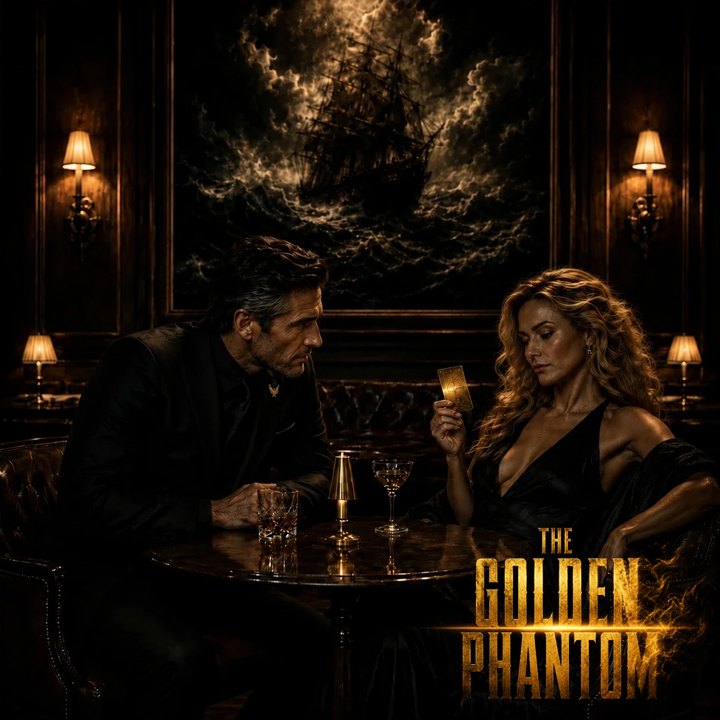
Christopher held his whiskey glass up to the light and continued, “As I was saying, this is the only rule everyone must follow. Our goal is simply the peace and security of our guests.” He paused briefly, but Alina remained fixated on the golden card, studying the delicate lines engraved upon it. “But in answer to your question… I, too, once thought I could stay completely separate from this world… a spectator, not a player.”
His voice grew involuntarily raspy and harsh, his fingers gripping the glass with a painful tightness. “It’s rare that I share this story, but… during a skirmish my wife was never supposed to be a part of, a stray bullet tore through the kitchen window. She was preparing dinner at that exact moment. It’s been ten years since that night, and believe me, I’m still standing behind that same window—and I couldn’t even cry. It’s as if that bullet took my tears with it.”
Alina said nothing; there was no need. In her silence, there was no pity, but rather an understanding only those who have tasted true pain could possess—a comprehension that requires no words.
“It was after that, that I built this safe haven,” Christopher continued, his gaze now fixed on the amber liquid in his glass. “A place where those like us can be calm and carefree for a few hours. A place where we don’t need to hide who we are.”
Soft jazz played from hidden speakers in the walls—a mournful saxophone drifting through the room. Christopher set his glass on the table and looked at Alina.
“Do you know what else fascinates me about you?” he added. “I think you’re an artist. That small hole in the forehead—clean, precise, painless. Like an artist’s signature. I’m well-informed about the finer details of the contracts; the owner is an old friend of mine.” He gave her a small wink. “If the world were a fairer place, they would be displaying your work in museums.”